
Join Low Voltage Nation — Find project opportunities and showcase your company to thousands of industry professionals
Microsoft has broken ground on a $386 million, 48 MW data center campus at Alviso in North San Jose — two buildings totaling about 397,000 square feet with an onsite 115 kV substation. Ten low voltage systems, an estimated $28.9 million in LV work, and no low voltage, security, fire alarm, or commissioning package holder named. HITT Contracting is the GC.
Microsoft's $386 million Alviso data center campus in San Jose requires ten low voltage systems, creating an estimated $28.9 million opportunity — on one of the few Silicon Valley projects that will actually be able to turn the power on.
Project Overview
Project data shows Microsoft has begun construction on a data center campus at 1657 Alviso-Milpitas Road in the Alviso district of North San Jose, valued at $385,576,931. HITT Contracting is the general contractor and broke ground on June 10, 2026, though site work — earthmoving and soil remediation — began in fall 2025. Completion is targeted for 2028.
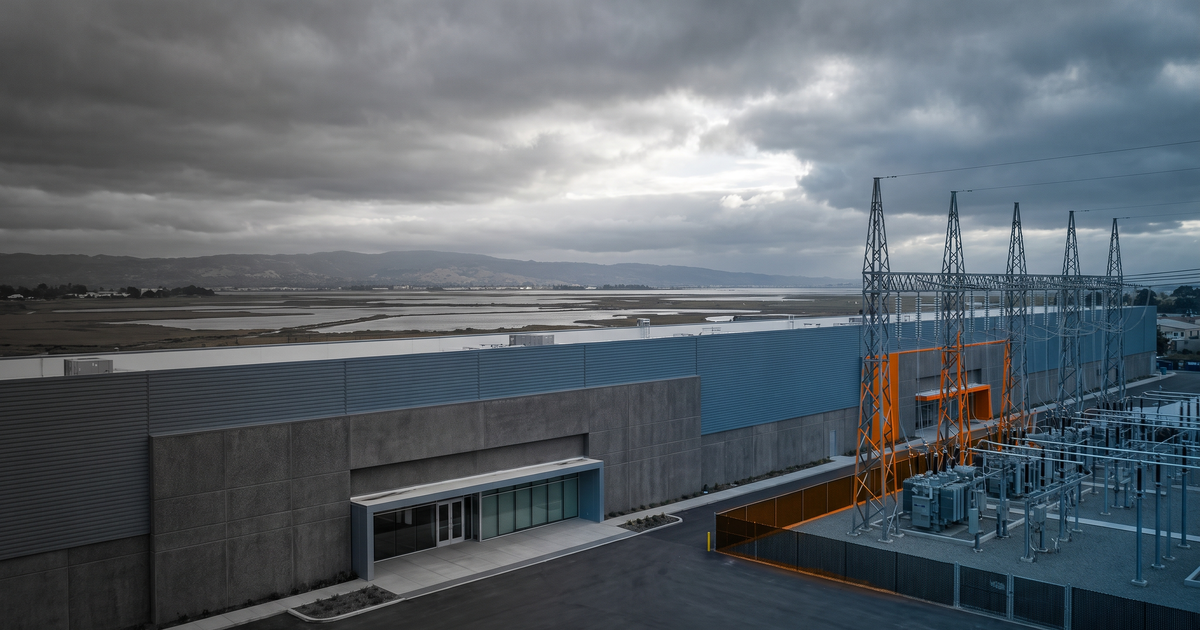
This is Microsoft's first self-owned and operated data center in San Jose. The campus will deliver 48 megawatts of critical capacity, including colocation space alongside operations and administrative support areas. California Energy Commission and City of San Jose records describe the approved project as two single-story buildings totaling roughly 396,914 gross square feet, with a maximum electrical load of up to 99 MW against an estimated 77 MW, 224 renewable natural gas generators, and an onsite 115 kV substation served by PG&E.
The build is expected to generate roughly 600 construction jobs across the skilled trades and about 100 permanent operational positions.
| Project | Microsoft Alviso Data Center Campus |
| Location | 1657 Alviso-Milpitas Road, San Jose, CA |
| Project Value | $385,576,931 |
| Scale | 2 single-story buildings, ~396,914 gross sq ft |
| Capacity | 48 MW critical; up to 99 MW max electrical load |
| Power | PG&E, onsite 115 kV substation, 224 RNG generators |
| General Contractor | HITT Contracting |
| Status | Under construction — broke ground June 10, 2026 |
| Completion | 2028 |
| LV Score | 9/10 |
The Silicon Valley Problem This Project Avoids
To understand why this specific data center matters more than its size suggests, you have to understand what is happening a few miles up the road.
Santa Clara has historically been the densest data center submarket in Northern California, powered by the city's own municipal utility, Silicon Valley Power. That utility is now out of headroom. SVP has been delaying new connections for data center customers, and reporting indicates that two large completed data centers in Santa Clara — buildings that are physically finished — are sitting empty because they cannot get a power connection. Supply agreements exist. The grid upgrades required to honor them may not be in place until 2028. SVP is spending roughly $450 million on system upgrades while sitting on requests for another 500 MW of load against a peak of about 720 MW.
That is a specific and underappreciated risk for low voltage contractors. A project that is built but cannot energize does not run commissioning, does not close out, and does not release retention on schedule. Crews get demobilized and recalled. Systems that were tested at substantial completion have to be re-verified after sitting idle.
The Alviso campus is in PG&E territory rather than SVP territory, and it carries its own 115 kV substation on site. San Jose has been actively marketing its PG&E partnership, and PG&E has committed roughly $2.6 billion to South Bay infrastructure between 2026 and 2035 explicitly tied to data center growth. PG&E rates run 25% to 40% above SVP's — Microsoft is paying a premium for power that will actually be there. For a contractor evaluating Bay Area data center work, that trade is the whole story: this job has an energization path.
Key Players
| Role | Company | Status |
|---|---|---|
| Owner / Operator | Microsoft | First self-owned and operated Microsoft data center in San Jose |
| General Contractor | HITT Contracting | Broke ground June 10, 2026. Also the GC on Rowan's Project Temple campus in Texas. |
| Utility | PG&E | Serving power; $2.6B South Bay infrastructure commitment 2026–2035 |
| Permitting Authority | City of San Jose | Planning approval; California Energy Commission holds generator records |
| Electrical Prime | Not announced | Open |
| Low Voltage / Technology Packages | Not announced | Open |
Public evidence names Microsoft and HITT. It does not name separate electrical, low voltage, fiber and outside plant, structured cabling, security, fire alarm, BMS, DAS and networking, grounding, or commissioning package holders. With a known and reachable general contractor already mobilized on site, the practical move is getting in front of HITT's Bay Area operation now.
Low Voltage Systems Breakdown
Signal tracks ten low voltage systems on this campus — the full mission-critical stack, compressed into a constrained urban infill site rather than spread across a rural greenfield campus.
| System | Category | Scope Description | Complexity |
|---|---|---|---|
| Fiber | Data | Single-mode backbone between the two buildings and within data halls, MPO/MTP trunk architecture, and high-density patching sized for AI workloads. At 48 MW of critical capacity the splice count is substantial even on a two-building campus. | Very High |
| Structured Cabling | Data/Voice | Copper and fiber horizontal distribution, cabinet-level patching, overhead pathway and ladder rack across roughly 397,000 square feet, plus the colocation and administrative areas which carry conventional commercial cabling requirements. | High |
| Outside Plant | Data | Campus duct bank, handholes and vaults, carrier entrance conduit, and diverse-path routing. On an infill site with remediated soil, OSP trenching coordination is materially harder than on open ground. | High |
| Access Control | Security | Perimeter-to-cage layered credentialing, mantraps, turnstiles, biometric readers at data hall entries, and cage-level control for colocation tenants. Colocation space raises the compliance bar because multiple customers share the building. | Very High |
| CCTV | Security | Perimeter, yard, substation approach, entry, corridor, and data hall coverage with long retention and analytics. Colocation audit requirements typically drive camera density above single-tenant norms. | High |
| Fire Alarm | Life Safety | Addressable detection with very early warning aspirating smoke detection in data halls, integrated with clean-agent or pre-action release, plus interfaces to the electrical and mechanical shutdown matrix. California amendments to the fire code and San Jose AHJ review add process time. | Very High |
| BMS / Controls | Building Automation | Cooling plant control, CRAH and containment monitoring, generator and substation status integration, and EPMS tie-ins. With 224 generators and an onsite substation, the monitoring point count is unusually high for a campus this size. | Very High |
| Networking | Data | Facility, OT, and security network infrastructure separate from the compute fabric — the layer that keeps the building observable and manageable. | High |
| DAS | Wireless | In-building cellular across large single-story structures with heavy electrical infrastructure, plus public safety radio coverage verified by the fire department. Single-story does not make this easy — dense equipment rooms and shielding create real coverage problems. | Medium-High |
| Grounding & Bonding | Infrastructure | Signal reference and telecom bonding backbone, ground rings, cabinet and pathway bonding to IEEE and BICSI practice, coordinated with the 115 kV substation grounding design. In a seismic zone this work also intersects bracing and anchorage requirements. | High |
Estimated Low Voltage Value
Signal does not carry a contracted low voltage value for Alviso, so the figure below is estimated from data center benchmarks.
| Project Value | $385,576,931 |
| Estimated LV Percentage | 6% (data center, construction-value basis) |
| System Count Multiplier | 1.25x (10 systems) |
| Estimated LV Contract Value | approximately $28.9 million |
A note on method, because it matters for how you read data center numbers generally. When a hyperscaler announces a "$10 billion campus," that figure typically bundles land, IT hardware, and multi-year program costs, which is why a low single-digit percentage is the right lens. The $385.6 million here is a reported construction value for two specific buildings, so a construction-based percentage applies instead. That is why this project shows a higher effective rate than a headline megaproject while producing a much smaller absolute number.
The practical read: $28.9 million split across ten packages produces awards in the $1 million to $8 million range depending on system. That is a size a strong regional integrator can actually win, on a campus carrying a hyperscaler's name — which is exactly the kind of reference that opens the next five bids.
Skills and Certifications Required
| System | Key Certifications | Critical Skills |
|---|---|---|
| Fiber & Outside Plant | BICSI INSTF, BICSI OSP, FOA CFOT/CFOS, BICSI RCDD | Mass fusion splicing, MPO/MTP polarity management, OTDR and Tier 2 testing, duct bank coordination on remediated soil |
| Structured Cabling | BICSI RCDD, BICSI DCDC, INSTC, manufacturer certification | High-volume production installation, containment and pathway design, Fluke certification at scale, as-built discipline |
| Fire Alarm | NICET Fire Alarm Level III+, California C-10/C-7 licensing as applicable | VESDA and aspirating detection, clean-agent and pre-action release logic, NFPA 72 with California amendments, AHJ coordination |
| Access Control & CCTV | ASIS PSP, manufacturer certification (Genetec, Lenel, Software House, Axis) | Multi-layer and cage-level credentialing, colocation audit support, large-scale VMS architecture, retention sizing |
| BMS / Controls | Tridium Niagara N4, BACnet, manufacturer certification | Cooling sequences, generator and substation status integration, EPMS tie-ins, high point-count commissioning |
| Grounding & Commissioning | BICSI/IEEE bonding practice, ACP/CxA credentials, IEC 62443 for OT security | Telecom bonding backbone, signal reference grids, seismic anchorage coordination, Level 4-5 integrated systems testing |
Two Bay Area realities shape staffing. California licensing is strictly enforced, and prevailing wage plus a strong union presence on mission-critical work in Santa Clara County means your labor model has to pencil before you bid. Second, commissioning depth matters more here than almost anywhere else — on a campus where energization timing is the defining regional risk, a contractor who can demonstrate disciplined Level 4 and Level 5 integrated systems testing is materially more valuable to the GC.
Market Signal
Silicon Valley has roughly 160 data centers and more than 625 MW of multi-tenant commissioned power, with vacancy under 3%. Demand is not the constraint. Electrons are.
The market is bifurcating along utility lines. Santa Clara, long the default, has hit a wall — finished buildings waiting on interconnection, a $450 million utility upgrade that lands in 2028, and a queue of load requests approaching the utility's entire existing peak. San Jose, in PG&E territory, is positioning itself as the alternative, with PG&E claiming headroom to nearly triple the city's electricity use and committing $2.6 billion to South Bay infrastructure over the next decade.
For low voltage contractors in Northern California, that bifurcation is the most useful thing on this page. Not every Bay Area data center opportunity is equal, and the differentiator is not the developer's balance sheet — it is whether the project has a credible path to power. Projects with dedicated onsite substations in PG&E territory will build and energize. Projects sitting in a constrained municipal queue may hand you a completed scope and then no closeout for two years.
Microsoft choosing to self-own and operate in San Jose, pay a rate premium, and build its own 115 kV substation is a fairly loud statement about where the company thinks the reliable capacity is. Contractors would do well to read the same map.
Find Projects Like This on Signal
LVN Signal tracks thousands of construction projects with low voltage opportunities across the country. Filter by city, system type, and project value to find your next bid.
Join 35,000+ Low Voltage Pros
Get weekly permit updates, tool deals, job opportunities, and industry news. No spam, unsubscribe anytime.